



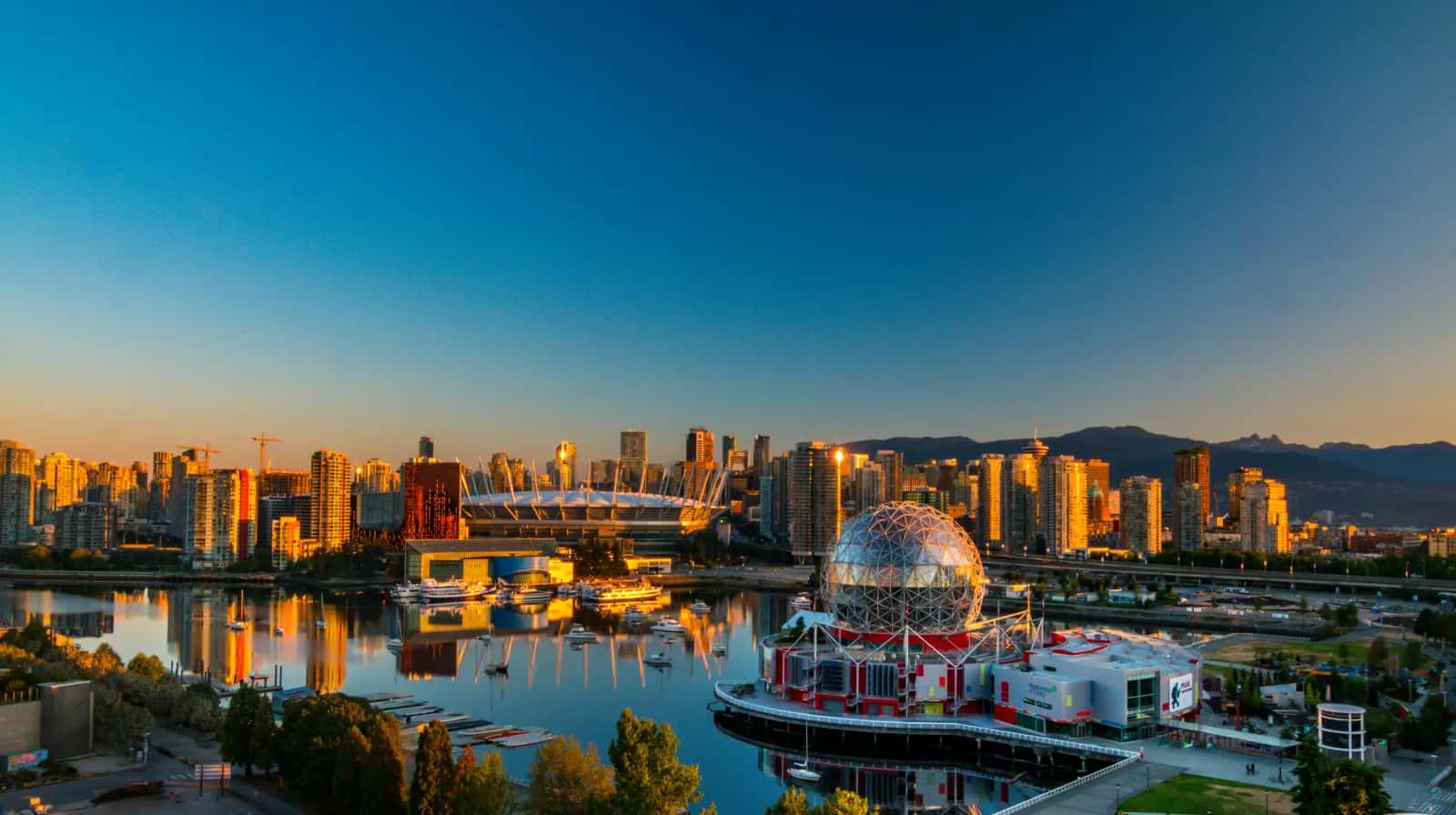
A local-first playbook for BC Place: neighborhoods, SkyTrain hacks, matchday rhythm, and what’s actually worth your time between fixtures.
Transparency: This guide contains affiliate links. We may earn a commission if you book through them, which helps fund our independent journalism.
Vancouver has a funny superpower: you can eat world-class sushi, walk to a World Cup match, and still be back on the seawall in time for a sunset that looks like someone spilled apricot paint over the mountains.
This Vancouver World Cup 2026 guide is built for fans who want the good stuff—BC Place logistics, where to stay, how to move fast when transit is jammed, and which neighborhoods feel right for your trip—without wasting money on the wrong side of a bridge or the wrong end of a nightlife street.
The headline strategy is simple: stay on (or near) the downtown peninsula if you can, use SkyTrain like locals do, and treat matchday like a city-wide street party that happens to have a world-class stadium in the middle of it.
Downtown, Yaletown, or the West End if you want a walkable matchday. Richmond works if you value YVR access and late-night eats.
SkyTrain + walking. Downtown stations put you in BC Place’s orbit fast; avoid rideshare surge right after the whistle.
Hotels are the big spend. Save money by choosing a slightly smaller room in a better location—you’ll spend your days outside anyway.
Most international visitors (excluding US citizens) need an Electronic Travel Authorization (eTA) or a visitor visa. It costs $7 CAD and is usually approved quickly.
Check eTA RequirementsMake sure your passport expiry is safe, check Canada entry rules (eTA/visa), and set flight alerts for YVR. If you want hospitality, start there—inventory moves fast.
Book accommodation. If Downtown and Yaletown look wild, use Richmond (Canada Line) or Burnaby (Expo Line) as your pressure valve.
Lock in your match plan and your between-match plan. Whistler day trips, seaplanes, and peak-season dinners don’t like last-minute people.
Reserve restaurants, map your walking routes (seawall is your friend), and download offline maps. Build one ‘rainy day’ plan for each match week.
Vancouver can feel expensive until you realize where the money actually goes: rooms, not getting around. Transit is straightforward, walking is easy, and you can eat incredibly well without turning every meal into a white-tablecloth event.
A useful mental model for match weeks: budget in CAD, expect downtown prices, and decide in advance whether you’re a “views person” (splurge on a waterfront base) or a “sleep-and-go person” (mid-range hotel, more experiences).
Vancouver trips go sideways when you pick the wrong base. Not “bad neighborhood” wrong—more like “why am I crossing a bridge twice a day” wrong. Below is how locals think about the city when we’re choosing where to sleep, eat, and celebrate.
Easiest logistics. Polished, walkable, expensive.
The “we’re celebrating tonight” neighborhood.
Local, leafy, beachy. Quiet in the best way.
Historic streets, louder nights, strong character.
Creative, brewery-friendly, very Vancouver.
Beaches, yoga mats, and sunset energy.
Practical, food-obsessed, airport-adjacent.
Easy SkyTrain access, shopping, good value.
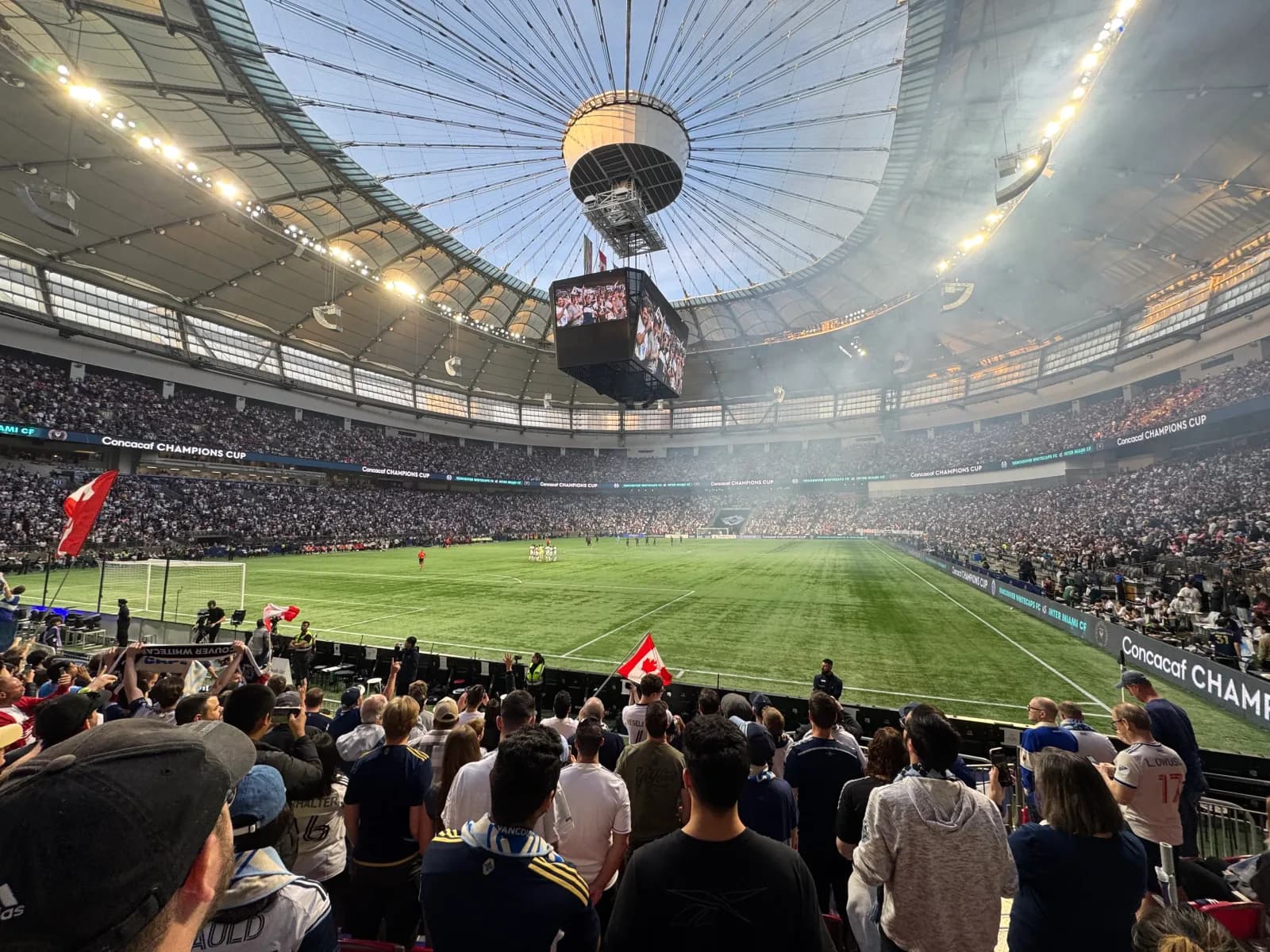
BC Place is downtown, walkable, and built for big-event nights.
BC Place sits right on the edge of False Creek—close enough that you can smell the water on breezy evenings. On World Cup nights, the whole Entertainment District tightens up around it: pre-game patios fill, streets turn into a river of jerseys, and SkyTrain platforms become a moving crowd soundtrack.
Vancouver hosts seven World Cup matches here (five group games plus a Round of 32 and Round of 16). FIFA’s Vancouver host-city breakdown is worth bookmarking if you want the official framing. FIFA overview
Want the deep dive on entrances, seating feel, and the “where do I actually stand” details? Use the dedicated stadium guide: BC Place World Cup 2026 guide.
Getting There: BC Place is in the city center. It is easily accessible by the Stadium-Chinatown SkyTrain station (Expo Line), just a short walk away.
Matchday in Vancouver is less “tailgate parking lot” and more “city festival that just happens to end at a stadium.” The key is timing: build in buffer, pick a pre-game neighborhood, and assume the first 20 minutes after full-time are pure crowd physics.
Pick your lane: Yaletown patios for easy walkability, Gastown for louder energy, or the seawall if you need fresh air before the noise. Eat early—lines spike fast.
Get into the BC Place orbit. SkyTrain to Stadium-Chinatown works, but walking from Downtown can be faster than waiting for the perfect train.
If the platforms look like a concert exit, don’t fight it. Walk 15 minutes, grab a snack, then ride. Yaletown and the waterfront absorb crowds better than squeezing onto the first train.
Vancouver’s official FIFA Fan Festival™ programming is planned around the PNE Amphitheatre area, with broadcast matches, entertainment, and family-friendly activations. Updates here
Book Vancouver ExperiencesDowntown parking fills and prices spike on big-event nights. If you must drive, park outside the downtown core near a SkyTrain station and ride in. Otherwise: walk + train beats stress.
Compare Rental CarsVancouver’s match schedule is published. For the authoritative version, keep FIFA’s schedule bookmarked and cross-check with BC Place updates. FIFA schedule
Canada's matches will be the hottest tickets in town. Use FIFA’s official channels, create your FIFA ID early, and register for ticket updates so you don’t miss sales windows.
FIFA Ticketing HubExpect premiums for Canada matches. If you missed the initial phases, stick to platforms with buyer protections and clear ticket transfer policies.
Vancouver has a real hotel squeeze, and match weeks tighten it further. If you can, stay Downtown, Yaletown, or the West End so you can walk to BC Place and back without your night being held hostage by traffic. If prices get spicy, use Richmond (Canada Line) or Burnaby (Expo Line) as a transit-friendly alternative.
Attached to Stadium to Stadium
0.7 miles to Stadium
1.2 miles to Stadium
5 min walk to Stadium
1.6 miles to Stadium
The automated rapid transit system. The Expo Line goes to the stadium. The Canada Line goes to the airport (YVR). Tap your credit card to ride.
The SeaBus connects Downtown to North Vancouver (mountains). Tiny Aquabus ferries take you across False Creek to Granville Island.
Avoid driving downtown. Parking is expensive and traffic is heavy. The city is designed for walking and transit.
Vancouver is famous for high-quality, affordable sushi. Try Miku for high-end aburi or local spots for great value.
Fresh Pacific seafood is a must. Oysters, salmon, and spot prawns are local delicacies found in Yaletown.
From dim sum in Richmond to ramen in the West End, the Asian food scene here is world-class.
Vancouver blends urban life with nature. You can cycle the seawall in the morning and dine in a skyscraper at night.
Larger than Central Park. Rent a bike and ride the Seawall for stunning ocean and mountain views.
A hub of food, art, and culture. Take the Aquabus and explore the famous Public Market.
Walk across a suspension bridge high above a canyon in the rainforest. A true PNW experience.
Vancouver is generally very safe. However, be cautious in the Downtown Eastside (Hastings & Main area), which faces social challenges.
Vancouver is a major film production hub. You might see film sets around town. The city is also deeply connected to its Indigenous roots, with beautiful Coast Salish art visible throughout the city and airport.
Vancouver doubles for many cities in movies. Keep an eye out for pink production signs.
Look for totem poles and public art honoring the Musqueam, Squamish, and Tsleil-Waututh nations.
The vibe is laid back. Yoga pants and hiking boots are standard attire, even in nice restaurants.
Mild and pleasant (15–22°C / 60–72°F). Rain is possible, so bring a light jacket.